

The security camera your grandfather knew was a passive device. It watched. It recorded. It waited for someone to review the footage after something went wrong. That model is not just outdated in today’s environment, it is a liability. The next generation of security is active, intelligent, and deeply integrated. And it is available right now for Quad Cities homes and businesses.
For most of the past three decades, commercial security meant a DVR in a back closet, a grid of grainy camera feeds on a monitor nobody watched, and a keycard reader bolted to the door. The system was reactive by design. Something happened. You pulled the tape. Maybe you got lucky.
That model made sense when it was the only option. It no longer is. AI-powered video analytics, cloud-managed access control, license plate recognition, and integrated alarm systems have fundamentally changed what a security system can do not just for enterprise campuses or government facilities, but for the manufacturing plant on John Deere Road, the apartment complex in Bettendorf, the church on North Brady, and the contractor’s equipment yard outside Eldridge.
This is the agile perimeter. Here is what it looks like, how it works, and why Quad Cities property owners and businesses need to understand it right now.
What AI Actually Does to a Security Camera
The term “AI cameras” gets thrown around so loosely that it has almost lost meaning. So let’s be precise about what artificial intelligence actually changes in a surveillance system because the gap between a standard IP camera and a true AI camera is not incremental. It is categorical.
A standard IP camera captures and records. It has no idea what it is looking at. Every moving leaf, every passing car, every shadow triggers the same response: motion detected. This is why most business owners stop looking at their security footage within six months of installation the alert volume is so high that the system becomes noise.
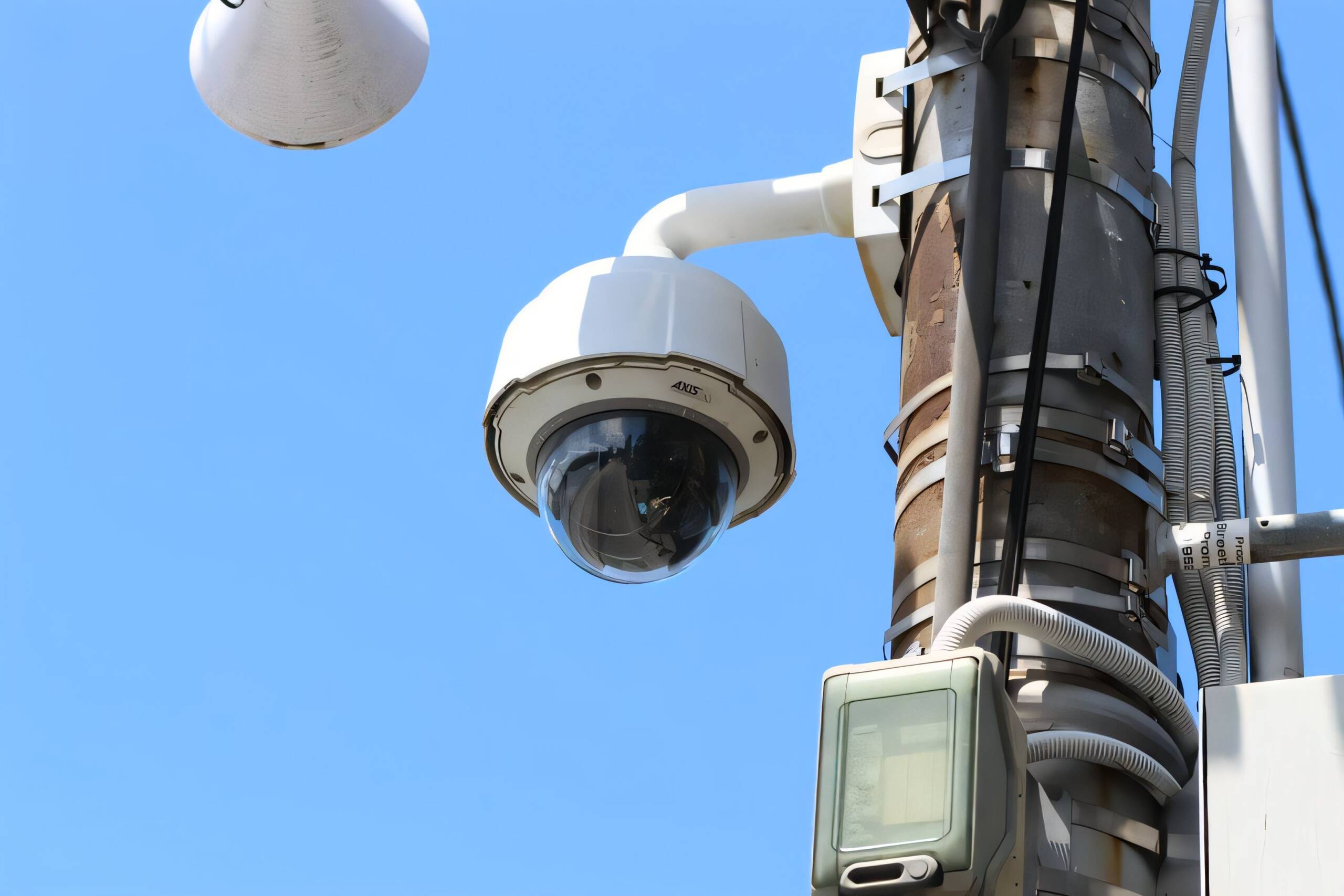
An AI camera understands what it is looking at. It can distinguish a person from a vehicle from an animal from a blowing plastic bag. It knows the difference between a delivery driver walking to your front door and someone crouched at your back fence at 2 a.m. It can recognize that a vehicle has been parked in the same spot for four hours without moving. It can tell you that someone crossed a line you drew on a map a virtual tripwire around your equipment yard or loading dock and send a push notification to your phone before anything is touched.
What AI Detection Actually Catches
The intelligence layer in modern AI cameras covers a range of detection types that simply did not exist in consumer or entry-level commercial systems five years ago:
Perimeter Intrusion
Virtual tripwires and zone entry detection the system alerts the moment a person or vehicle crosses a boundary you define, regardless of lighting conditions.
Loitering Detection
A person or vehicle that remains in a defined area beyond a set time threshold triggers an alert catching behavior patterns that standard motion detection misses entirely.
Object Left Behind
The camera identifies when an object has been placed in a restricted area and not retrieved critical for construction sites, loading docks, and high-value equipment storage.
Vehicle Classification
AI distinguishes between passenger cars, pickup trucks, semi-trucks, motorcycles, and pedestrians enabling intelligent responses based on vehicle type, not just motion.
Crowd Density
The system monitors how many people are in a defined area and alerts when density crosses a threshold useful for events, lobbies, and controlled access areas.
Behavior Analysis
Running in a no-run zone, falling detection, aggressive movement patterns AI recognizes anomalous behavior and flags it in real time without human monitoring.
The Quad Cities Context
With Davenport’s property crime rate running 4,122 per 100,000 residents and Rock Island County cities ranking in the bottom 3 to 13% nationally for safety, the Quad Cities metro has a genuine and documented property crime problem. AI cameras do not just record crime they interrupt it. A visible PTZ camera that auto-tracks a person approaching your building at midnight is a fundamentally different deterrent than a static dome nobody is watching. The active nature of AI surveillance changes the calculus for the opportunistic criminal.
License Plate Recognition The Access Layer Nobody Talks About
Of all the AI camera capabilities now available at the commercial level, license plate recognition (LPR) may be the single most underutilized technology in the Quad Cities market and the one with the most immediate, practical impact for businesses with parking lots, gated facilities, fleet operations, or high-turnover vendor traffic.
Here is the core capability: an LPR camera reads a vehicle’s plate number in real time, checks it against a database, and can trigger an automatic response in under one second. The vehicle does not need to slow down. The driver does not need to roll down a window. The gate opens. Or it does not. And every single plate that passes the camera is logged with a timestamp and a photo automatically, without anyone touching a keyboard.
What LPR Actually Enables
- Automatic gate access for authorized vehicles company vehicles, approved vendors, and employee cars gain entry without cards, fobs, or interaction. Unauthorized plates do not.
- BOLO watchlists flag specific plates and receive an immediate alert the moment that vehicle enters your parking area. Police reports, stolen vehicles, terminated employees any plate you add to the list triggers a push notification in real time.
- Visitor and vendor logs every vehicle that enters your facility is automatically documented with arrival time, departure time, and plate image. No sign-in sheet. No manual log. Complete records available on demand.
- After-hours intrusion any plate entering your facility outside of defined business hours triggers an immediate alert, even if access is not physically restricted.
- Insurance and liability documentation hit-and-run in your parking lot? Disputed delivery time? LPR provides an automatic, timestamped record that standard cameras cannot match.
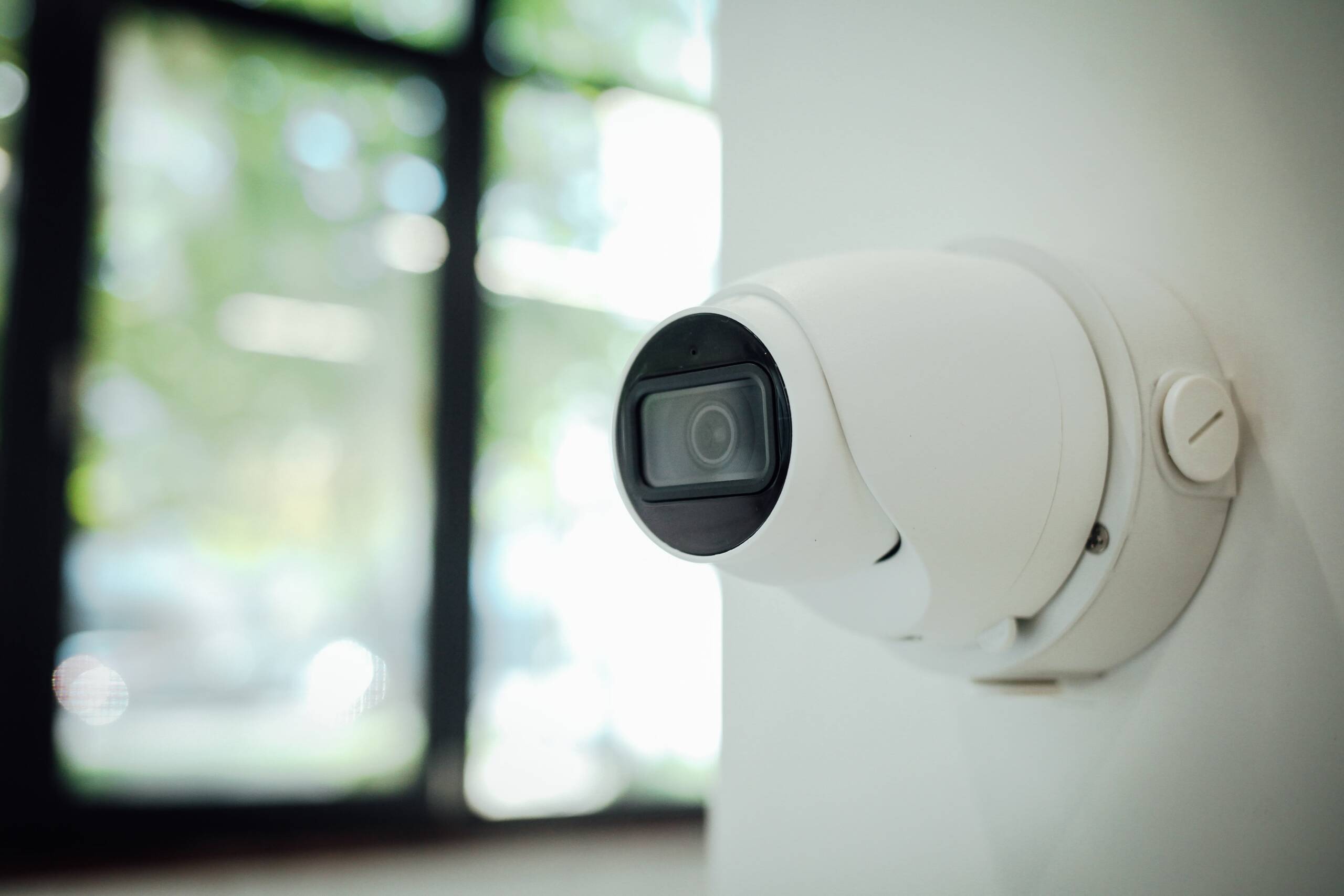
For a manufacturing facility in Moline, a construction company in Davenport, or a medical practice in Bettendorf, LPR transforms the parking lot from a vulnerability into a documented, managed access point. The same camera doing perimeter surveillance is also doing access control without a human being present at any hour of the day or night.
When Cameras and Access Control Become One System
The most powerful shift in commercial security over the last five years is not any single technology. It is the integration of cameras, access control, and AI analytics into a single unified system where each component feeds and triggers the others.
Here is what that looks like in practice at a real Quad Cities facility:
An employee badges through a side door at 11:47 p.m. a door they are not scheduled to access at that hour. The access control system logs the entry and flags it as an anomaly. The camera covering that door is automatically triggered to begin recording at higher frame rate. An alert is pushed to the facility manager’s phone with a photo of the person at the door. If the camera’s AI identifies a second person following through behind the first tailgating a second alert fires immediately. The entire event is logged, timestamped, and saved to a restricted access record with no human intervention.
This is not a future scenario. This is what integrated systems can do today.The technical term for this is system integration cameras talking to access control, access control talking to alarm systems, alarm systems talking to a central management dashboard or a mobile app in the facility manager’s pocket. When these systems are siloed, they are each useful in isolation. When they are integrated, they create something categorically more powerful: a facility that understands its own state in real time and responds automatically to anomalies.
The Integration Stack What It Actually Looks Like
A fully integrated security ecosystem for a commercial or industrial property in the Quad Cities typically includes these layers working together:
AI Camera Layer
Perimeter and interior IP cameras with on-board AI processing. Handles detection, classification, and alerting. Feeds video to the NVR and VMS simultaneously.
Video Management System
The central brain. VMS software aggregates all camera feeds, manages recording rules, stores AI detection events, and enables intelligent search across footage.
Cloud Access Control
Cloud-managed systems like PDK control every door, gate, and reader. Credential management, zone scheduling, and remote lockdown all happen from a single dashboard.
License Plate Recognition
Dedicated LPR cameras at entry points feed plate data to the access control system and VMS simultaneously enabling automatic gate response and searchable vehicle logs.
Alarm Integration
Intrusion detection and alarm systems are wired into the camera and access control layer a door forced open triggers cameras, locks adjacent access points, and pushes alerts simultaneously.
Mobile Command
The entire system is managed from a phone or tablet. Live view, instant playback, door unlock, credential revoke, alert response everything available from anywhere with cell service.
Mobile Surveillance The Deployable Perimeter
Not every security challenge involves a fixed building with a permanent infrastructure. Construction sites, special events, temporary staging areas, rural equipment yards, and vacant properties present a fundamentally different problem: how do you secure a perimeter that has no walls, no power, and no existing infrastructure?
This is where mobile surveillance units change the equation entirely. A self-contained mobile surveillance trailer solar or battery powered, with built-in cellular connectivity and AI-capable cameras can be deployed to any location in the Quad Cities metro within hours. No trenching. No electrical. No IT infrastructure. The unit goes live the moment it is positioned.
- Construction site protection equipment and material theft at Quad Cities construction projects is a documented and ongoing problem. A mobile unit on site provides active deterrence and real-time monitoring from first ground break to final punch list.
- Event security riverfront festivals, outdoor concerts, large parking areas, and temporary gatherings require flexible coverage that permanent infrastructure cannot provide. Mobile units deploy and redeploy as the event layout changes.
- Vacant and transitional properties a property between tenants, under renovation, or awaiting development is a target. Mobile surveillance provides coverage during the gap without permanent installation costs.
- Rural and agricultural farm equipment theft is a rising issue in Cedar and Scott County. Mobile units can be repositioned across large agricultural properties based on where high-value assets are located at any given time.
The AI Advantage on Mobile Units
The most important feature of a modern mobile surveillance unit is not the camera resolution or the solar panel it is the AI analytics running on board. Because these units operate without a dedicated monitoring station, the AI has to do the work that a human operator would otherwise do. Motion-triggered recording, perimeter tripwires, vehicle detection, and push alerts to a phone mean the unit is actively monitoring around the clock without anyone watching a screen. That is not just convenient in a construction site at 3 a.m. or a vacant property on the weekend, it is the only realistic approach.
Why Integration Beats Individual Systems Every Time
The most common security mistake Quad Cities business owners make is purchasing good individual systems that do not talk to each other. Excellent cameras. Solid access control. Reliable alarm. All installed by different companies, managed on different platforms, with no integration layer between them. The result is a security ecosystem that is less than the sum of its parts.
When your camera system does not know your access control system exists, it cannot automatically start recording when a door is forced. When your alarm does not know which camera is closest to the triggered sensor, it cannot automatically present that feed to the responding officer. When your LPR does not connect to your access control, a plate on your watchlist drives through your parking lot and nothing happens.
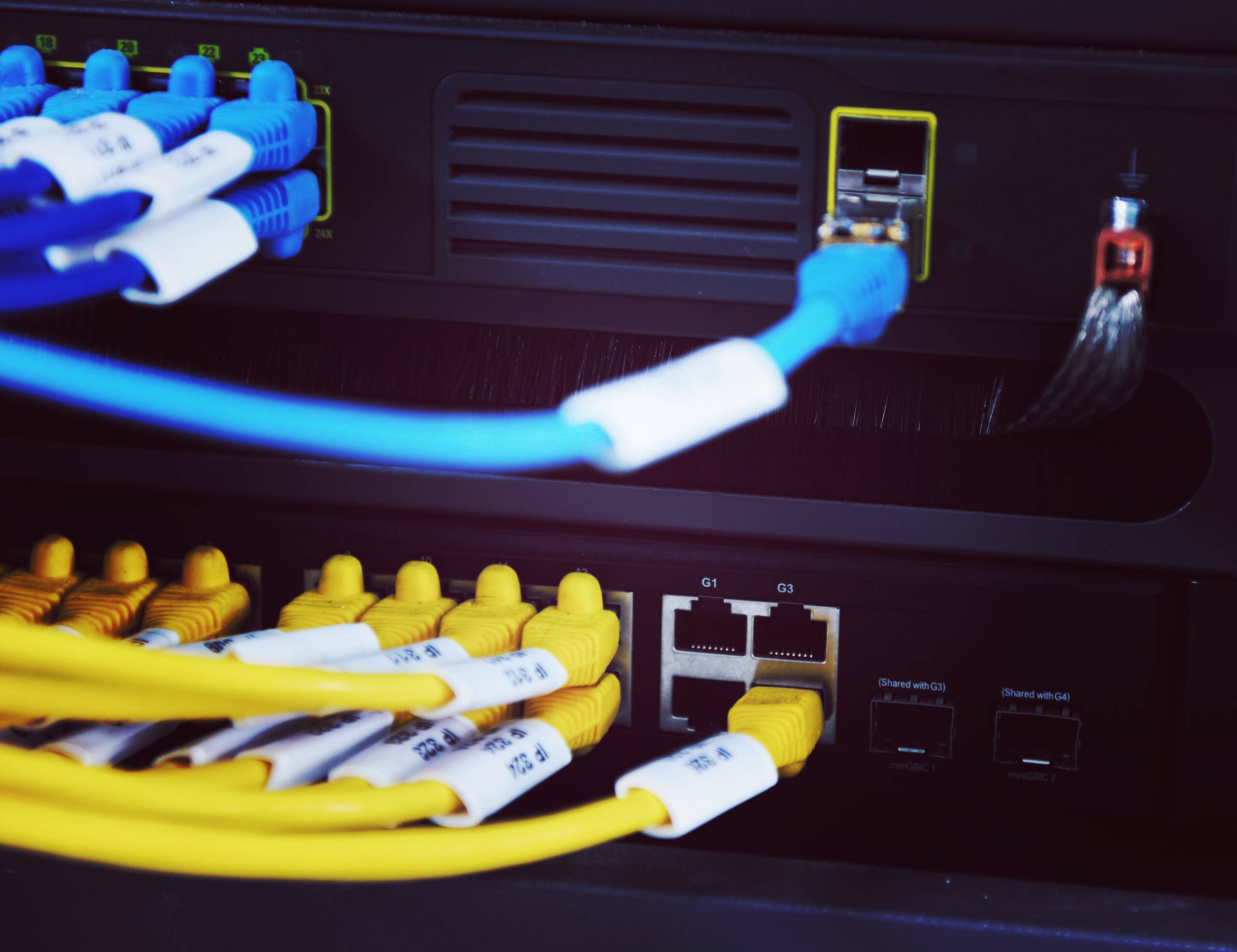
Integration is not a luxury feature for enterprise campuses. For a mid-size Quad Cities business a manufacturing operation, a medical practice, a church, a multi-tenant commercial property a properly integrated system designed by a single local team is what separates security theater from actual security.
What Fusion Security Designs and Installs
Fusion Security is a Davenport-based security systems integrator serving both sides of the Quad Cities metro Scott County, Iowa and Rock Island County, Illinois. Every system we design starts with a site walk and an honest conversation about what the property actually needs, what threats are specific to that location, and what budget makes the system viable long-term.
We install UNV, Hanwha, and Axis professional IP camera systems the same hardware used by hospitals, universities, and commercial campuses not consumer-grade equipment from a big-box store. We integrate PDK cloud-based access control for facilities where credential management and zone control matter. We design systems where cameras, access control, alarm, and LPR work as a single ecosystem, managed from a mobile app, with no dependency on an on-site server that can fail at 2 a.m.
- Commercial security camera installation turret, dome, PTZ, panoramic, and LPR systems for businesses, industrial properties, churches, and multi-site operations across the Quad Cities
- Cloud-based access control PDK systems with mobile credentials, zone scheduling, instant remote lockdown, and full audit logging for any facility that needs to know who was where and when
- Mobile surveillance units deployable AI-capable surveillance for construction sites, events, vacant properties, and any location without permanent infrastructure
- System integration cameras, access control, alarm, and LPR designed to operate as a single unified system, not a collection of disconnected tools
- Residential security custom IP camera layouts for Quad Cities homes with full mobile app setup, local NVR storage, and no monthly cloud fees
The question is not whether your business needs better security. In a metro where Davenport’s property crime rate is nearly double the national average and vehicle theft in Rock Island County ranks among the highest in the nation, the question is whether your current system is active enough to actually stop anything or whether it is just recording what already happened.
The Bottom Line for Quad Cities Property Owners
The technology gap between what most Quad Cities businesses currently have installed and what is available today is significant. AI cameras that understand what they see. License plate recognition that automates vehicle access. Cloud-managed access control that lets you revoke a credential in thirty seconds from your phone. Integrated systems where every component knows what every other component is doing.
None of this requires a massive enterprise budget. The same integrated security capabilities that protect a hospital campus are available properly scaled for a small manufacturing operation, a church, a contractor’s yard, or a multi-tenant commercial building. The difference is working with an integrator who designs systems instead of selling products.
Fusion Security designs, installs, and supports integrated security systems for homes and businesses across the Quad Cities. If your current system is just watching and recording call us. There is a better way to protect what you have built.
Ready for a System That Actually Works?
Free on-site consultations for homes and businesses across Scott County, Iowa and Rock Island County, Illinois.
Schedule a Free Site Visit Call (563) 293-3631